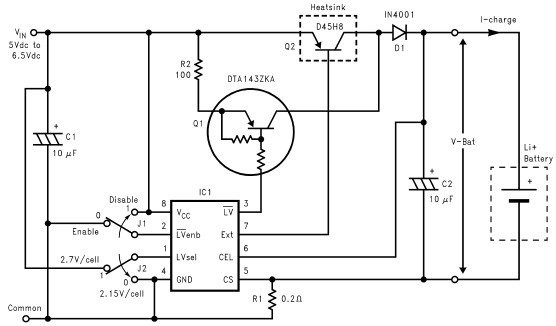
Background Knowledge:
All electrical systems require a proper power management system. My main experience with power management has been in the battery management field as well as wireless harvesting. However due to practicality issues involved with wireless harvesting the purpose of this post will be focused on battery power management, as well as power supply management.
Quick Run:
There are plenty of circuits for controlling the charge a lithium ion battery gets. This post will discribe how they work, I am also refraining from speaking about power management as this is a concept that is taught tirelessly at engineering schools.
Lithium ion batteries require you to charge in a constant current to constant voltage fashion. This means you start charging a cell with a constant current, and once you reach the correct voltage you switch over to using a constant voltage instead.
The hardest part of this is the 1% error margin on either side. If you undercharge by 1% you end up reducing carrying capacity of the battery. While if you overcharge by 1% you risk battery failure.
There is a danger chart associated with lithium ion batteries which is included below:
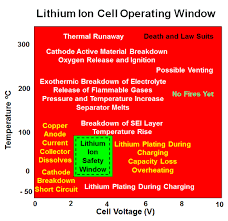
The role of the charge circuit is to switch between cells to prevent a single cell from stepping outside the safety window.
Most charging circuits are designed using a flyback design, this is to allow the quick switching of charging different cells in the battery system. A flyback design image is posted below:

As shown the flyback is used as an energy storage device, instead of a transformer.
Most Important Tidbits:
The following I found to be interesting tidbits:
- Flyback Transformers are used as energy storage devices
- Flyback Transformers are more like a parallel set of inductors than a transformer