
Background Knowledge:
Machine learning is another field which takes a larger portion of our lives. Unfortunately when talking with most individuals their knowledge of machine learning can be summed up quite quickly under the umbrella term neural network. They know nothing about different neural network topologies, and much less about concepts like Boosting which helps you train neural networks. They mostly worked with one or two frameworks such as tensorflow or caffe, and fewer still know about model fitting or superquadratics which work on identifying quite a lot of models. This is due to the fact that we attempt to reach a larger audience with machine learning, however this requires we cut down the background knowledge required to understand it.
Quick Run:
There are different ways to fit unknown models to particular inputs and outputs. The goto among quite a lot of individuals is run it through a neural network, however this is typically a slow solution and takes quite a while to train. Specifically when it comes to things such as financial analysis. This post should help explain when and were to use these possible systems.
Hidden Markov Model:
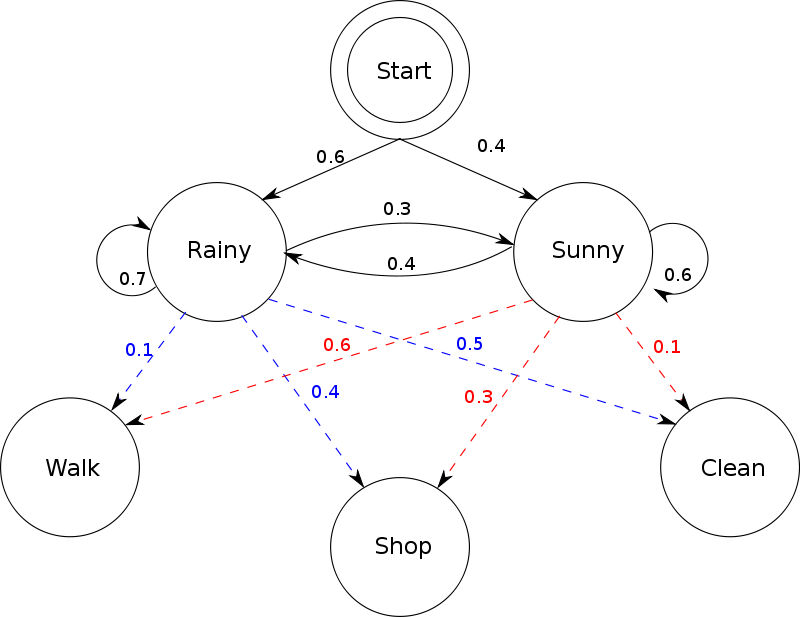
This treats the system as a state machine with a hidden or unknown variable which has to be predicted. This is very good when we are trying to identify a series of data as a perticular field in a finite state of answers. However it is limited when we have a potentially infinite set of answers as it requires checking of every single possible individual in that area. It on the plus side very fast in training as well as identification.
Convolution Neural Networks:
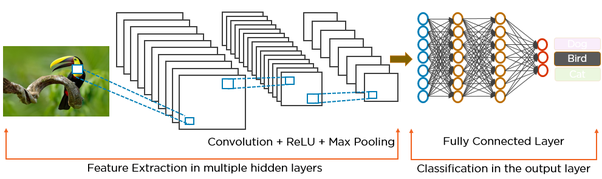
These are great at image classification, poor however for series data, unless the series is classified in a kernel and you treat it as a large image. The main issue is that it fails to have a proper feedback in the layers. These take quite a while to train unfortunately due to the complexity.
Recurrent Neural Networks:
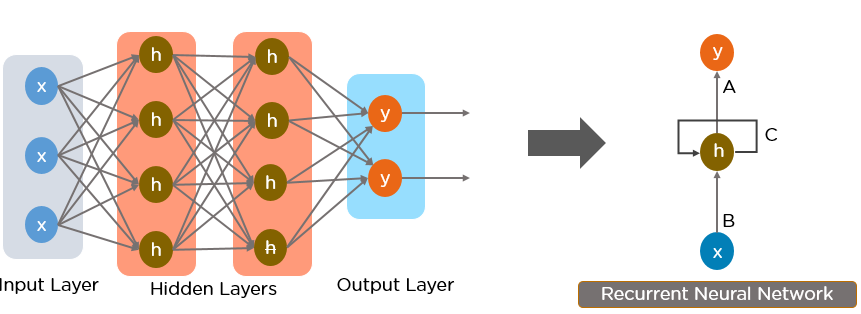
These are good for fairly stable systems, poor for volatile systems such as the stock market. They take a while to train and have a long term memory which comes from the feedback.
Most Important Tidbits:
- Use HMM for solving problems with set answers
- Use RNN for solving long term dependancy problems (something hundreds of measurements away affecting current measurement)
- Use CNN for classification problems of large datasets
- If the system is volatile try to use HMM, if stable try to use RNN